
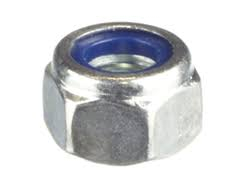
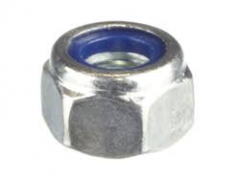
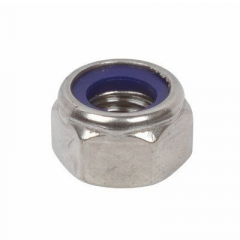
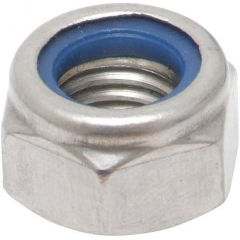

Nyloc nuts use a plastic collar to create a "prevailing torque" lock that resists loosening from vibration. While highly effective, they are generally intended for one-time use and have temperature limits (typically up to 120 deg C) as the nylon can degrade.
The primary difference between Type P and Type T lies in the physical depth (height) of the nut.
Type P (Standard / Heavy)
- Profile: Referred to as the "Full" or "Standard" height nyloc.
- Standards: Usually manufactured to DIN 982 or ISO 7041.
- Strength: Because it is thicker, it has more metal thread engagement than Type T, making it the preferred choice for higher-load applications where strength is a priority.
- Common Grade: Often found in higher steel property classes like Class 10.
Type T (Thin / Low)
- Profile: Referred to as the "Thin" or "Low" profile nyloc.
- Standards: Usually manufactured to DIN 985 or ISO 10511.
- Application: Ideal for restricted spaces where a standard nut won't fit or where the bolt length is limited. It is widely used in automotive, aerospace, and general machinery.
- Common Grade: Typically available in Class 6 or 8 steel.