

LOCKNUTS

Locknuts generally fall into two categories: prevailing torque (which resist movement immediately) and free-spinning (which only lock once tightened against a surface). 

Prevailing Torque Nuts

These create friction even before they are fully tightened against a surface, requiring a wrench for the entire installation process. 

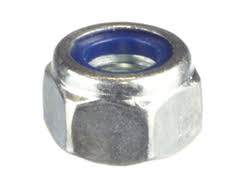
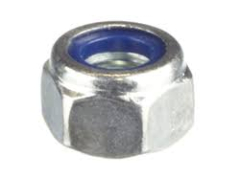
  • Nylon Insert Nuts (Nyloc): A popular and economical choice featuring a nylon ring that deforms around the bolt threads. They are effective for standard temperatures (up to approx. 120 deg C) but are generally considered one-time use as the nylon loses its grip once removed.
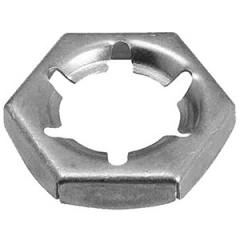
  • All-Metal Locking Nuts (Philidas /Turret): Designed for high-heat environments where nylon would melt. The top of the nut is slightly pinched or crimped, distorting the threads to create a mechanical bind.
  • Aerotight / BinX Nuts: These all-metal "stiff nuts" use a slotted, bent-beam design that acts like a spring to grip the bolt. They are often reusable because the metal returns to its original shape.

Free-Spinning Locknuts

These spin freely until they make contact with the bearing surface, making them faster to install by hand. 

  • Serrated Flange Nuts: Feature integrated "teeth" on the base that bite into the material surface. While effective, they can damage the finish or paint of the part being fastened.
  • Thin Nuts: A traditional method where a thinner nut is "jammed" against a standard nut to lock the assembly.
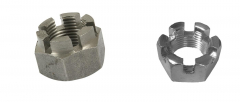
  • Castle or Slotted Nuts: These have slots that align with a hole in the bolt for a cotter pin. This provides a physical "positive lock" that cannot vibrate loose, commonly used on safety-critical parts like axles.
LOCKNUTS