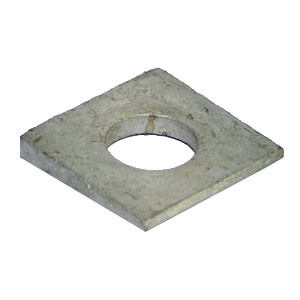
Tapered washers are specialised wedge-shaped washers designed to provide a flat, parallel mating surface on angled structural components.
They prevent bolts from bending or snapping when fastening un-parallel surfaces, such as the sloping flanges of structural I-beams.
Available Angles
The taper of a washer corresponds directly to the slope angle of the structural steel flange it is designed to fit. The most common standard angles include:
5° Taper: The most common standard used for modern metric structural channels and standard rolled steel joists.
6.5° Taper: Frequently utilised for traditional or older steel configurations, heavier structural I-beams, and deeper U-channels.
Common Shapes
D-Shaped Type
Design: These washers feature a flat edge cut into either the outer circumference, the internal diameter, or both.
Purpose: The flat profile prevents the washer from spinning as the nut or bolt is tightened.
Applications: They are strictly preferred in highly compact, restricted spaces where a standard square washer would hit an adjacent flange or wall. Historically, most taper washers were cast iron D-shapes.
Square Type
Design: Modern construction standard washers punched from rolled steel bars.
Purpose: They feature one or two distinct indicator grooves scored onto the thick or top side of the slope. This acts as a visual marker, so installers instantly align the taper correctly against the sloping flange.
Lorem ipsum dolor sit amet, consectetur adipiscing elit. Mauris euismod ultrices accumsan. Nullam congue nunc ipsum, ut aliquam elit bibendum eu. Vivamus malesuada nulla nec eros scelerisque lacinia. Nullam vestibulum ornare est. Nulla eget mollis tellus, ut fringilla risus. Morbi malesuada, ante eget posuere sagittis, velit enim pretium libero, eget interdum lacus ipsum a nisi. Maecenas metus ex, finibus id sem sed, placerat posuere arcu. Curabitur non ante sit amet felis tincidunt interdum sed ut velit.