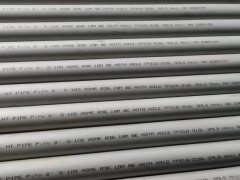
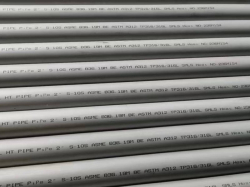
Stainless steel 316L pipe is a low-carbon version of 316 stainless steel.
Offering superior corrosion resistance, especially in harsh, chloride-rich environments like saltwater, compared to the more common 304 grade.
This enhanced durability makes it a premium material, and its low carbon content provides excellent weldability.
Properties and composition
- Composition: Contains approximately 16% chromium, 10% nickel, and crucially, 2-3% molybdenum. The 'L' stands for low carbon, with a maximum of 0.03% carbon to minimise carbide precipitation during welding.
- Corrosion resistance: The addition of molybdenum provides greater resistance to pitting and crevice corrosion from chlorides (salts). It also offers strong resistance to various acids.
- Heat resistance: Performs well in high-temperature settings, with resistance to oxidation. The 316L variant is resistant to sensitisation (intergranular corrosion) caused by the heat of welding.
- Weldability and formability: Its low carbon content makes it particularly well-suited for heavy-duty welding applications because it eliminates the need for post-weld annealing. It also has good formability and strength.
- Hygiene: Like 304, 316L is easy to clean and sterilise, making it a reliable choice for sanitary applications.
Common applications
- Marine environments: The superior resistance to chlorides makes 316L the preferred choice for saltwater and coastal applications, such as boat fittings, railings, and structural components.
- Chemical and petrochemical: It is used for transporting corrosive chemicals, acids, and solvents in chemical containers, pressure vessels, and industrial pipelines.
- Medical and pharmaceutical: Due to its hygiene properties and corrosion resistance, it is used in surgical instruments, medical implants, and pharmaceutical processing equipment.
- Food and beverage: Commonly used in food processing equipment, brewery tanks, and other applications where hygiene and resistance to acidic foods are important.
- Water and wastewater treatment: It is widely used in water filtration screens, pipes, and other equipment exposed to treated water and chemicals.