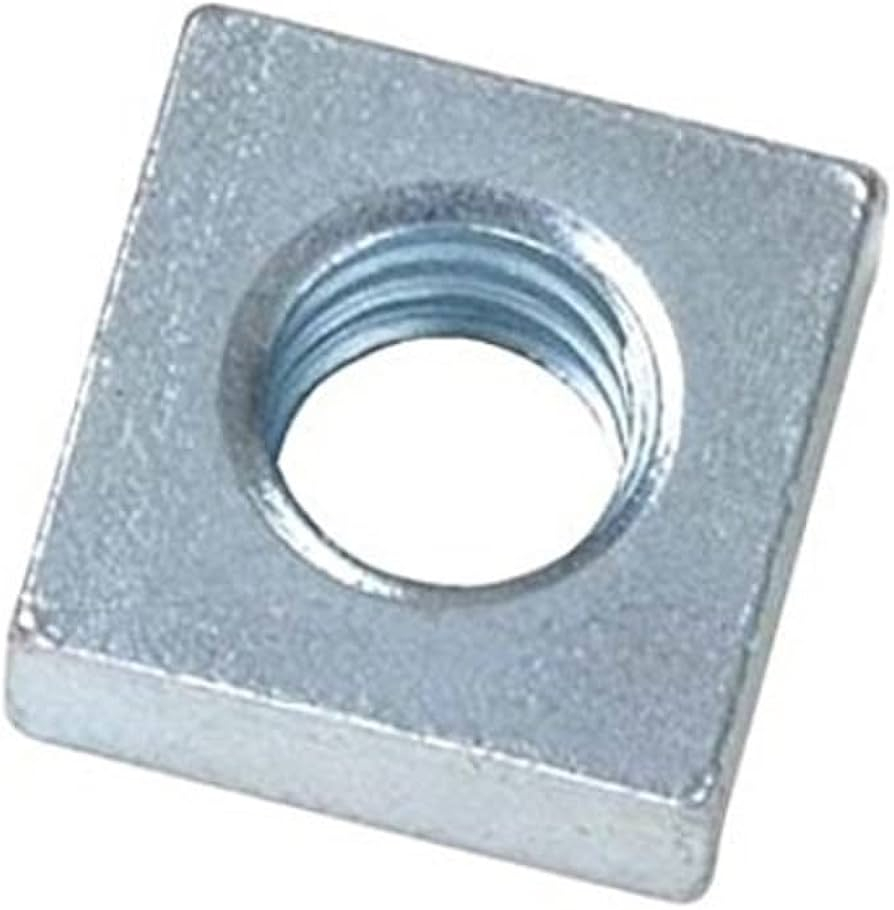
Square nuts are most commonly used with roofing bolts.
Why Square Nuts are Used
The square shape isn't just tradition; it offers several practical advantages in roofing and assembly:
Self-Gripping: When used with corrugated roofing, the square nut can often self-grip within the corrugation, preventing it from spinning while you tighten the bolt from the other side.
Greater Surface Area: Square nuts have a larger surface area in contact with the material compared to hex nuts. This increases resistance to loosening caused by wind or vibration.
Ease of Hand-Spinning: Their wide, flat sides make them easy to spin onto the bolt by hand before final tightening with a wrench or pliers.
Anti-Roll: Unlike hexagonal nuts, square nuts are less likely to roll away if dropped on a sloped roof or uneven surface.
Common Specifications
Materials & Finishes: Most are made of steel with a Bright Zinc Plating (BZP) to resist corrosion in outdoor environments. For coastal or high-moisture areas, A2 stainless steel versions are available.
Sizes: Typically found in metric sizes ranging from M4 to M10, with M6 being the most common size for standard roofing and guttering tasks.
Standards: They often follow dimensions like DIN 562 for thin square nuts or DIN 557 for standard thickness.
Lorem ipsum dolor sit amet, consectetur adipiscing elit. Mauris euismod ultrices accumsan. Nullam congue nunc ipsum, ut aliquam elit bibendum eu. Vivamus malesuada nulla nec eros scelerisque lacinia. Nullam vestibulum ornare est. Nulla eget mollis tellus, ut fringilla risus. Morbi malesuada, ante eget posuere sagittis, velit enim pretium libero, eget interdum lacus ipsum a nisi. Maecenas metus ex, finibus id sem sed, placerat posuere arcu. Curabitur non ante sit amet felis tincidunt interdum sed ut velit.