


WELCOME TO OUR NEW WEBSITE1
Posted on 22-09-2026
Welcome to Our Brand New E-Commerce Website!
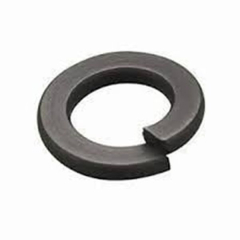
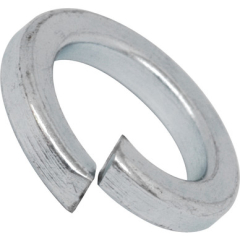
Spring washers are designed to act as an axial spring, flexing elastically under clamping loads to absorb vibration, accommodate thermal expansion, or provide a locking mechanism.
These standard locking washers are split at one point and twisted into a helix. When compressed, they act like a single-turn coil spring to maintain assembly tension.
They are categorized by the cross-sectional geometry of their wire or ring profile.
|
Cross-Section |
Engineering Description & Function |
Common Standard |
|
Square Section |
Features a perfectly square cross-section profile. Designed with a narrower outer diameter specifically to seat flush within the counterbores of socket head cap screws. |
DIN 7980 / BS 4464 Type A |
|
Rectangular Section |
Features a wider, flattened rectangular profile. Provides a broader bearing footprint, ideal for typical hexagon-head bolts and nut assemblies. |
DIN 127 Type B / BS 1802 |
Material Configurations and Properties
The choice of material dictates a spring washer's elasticity, fatigue lifespan, and maximum load capacity:
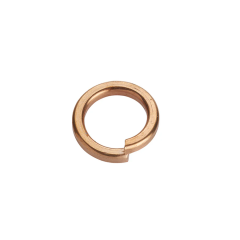
Phosphor Bronze / Silicon Bronze: Non-ferrous, non-magnetic alloys offering highly stable spring properties coupled with excellent electrical conductivity. Frequently integrated directly into marine switchgear and electrical terminal infrastructure to prevent galvanic corrosion
Lorem ipsum dolor sit amet, consectetur adipiscing elit. Mauris euismod ultrices accumsan. Nullam congue nunc ipsum, ut aliquam elit bibendum eu. Vivamus malesuada nulla nec eros scelerisque lacinia. Nullam vestibulum ornare est. Nulla eget mollis tellus, ut fringilla risus. Morbi malesuada, ante eget posuere sagittis, velit enim pretium libero, eget interdum lacus ipsum a nisi. Maecenas metus ex, finibus id sem sed, placerat posuere arcu. Curabitur non ante sit amet felis tincidunt interdum sed ut velit.